
My Fur Babies

This winter I lost my dogs in a span of a few weeks; Van Gogh, a black Lab mix, and Kisa a Chow mix. They were both over 12 years old. Van Gogh had arthritis so bad he could not get up or walk, he was 90 pounds and it finally got too much for me.  It is a terrible thing when you decide to kill something you love.  I miss him every day. Kisa died of a stroke just a few weeks after Gogh leaving our house strangely empty.

Van Gogh lovingly known as Goby and Kisa also known as Dingly

We started talking about getting another dog in January and were thinking of buying a puppy maybe in the summer. My friend heard I was talking about getting a puppy and invited me over to meet the dog she was fostering but who was not yet ready for adoption.  It was love at first sight on my part although Tippy was not so sure.  Tippy is a puppy mill rescue and very anxious.  My friend had already calmed her sufficiently that Tippy might take a treat if you would sit really quietly and not look at her, but she wouldn’t come in from outside and she wouldn’t tolerate a leash.  Even with all the problems I felt Tippy was the dog meant for us.

Her anxiety and her fear resonated with me. I also have trouble trusting and want friends yet am reluctant to take a risk. I understand how difficult it is to let someone get close. Trauma leaves deep wounds and Tippy’s wounds called to mine. As Tippy learns to trust so I am learning a lesson in trusting. Sometimes it is worth the risk. Sometimes we need a friend, like Tippy needed Maya.

Tippy met Maya, another puppy mill mamma, when they were paired at the shelter so Maya could help Tippy with her anxiety. Finally, I was able to foster Tippy and Maya together.  They became a bonded pair and so I adopted them both!
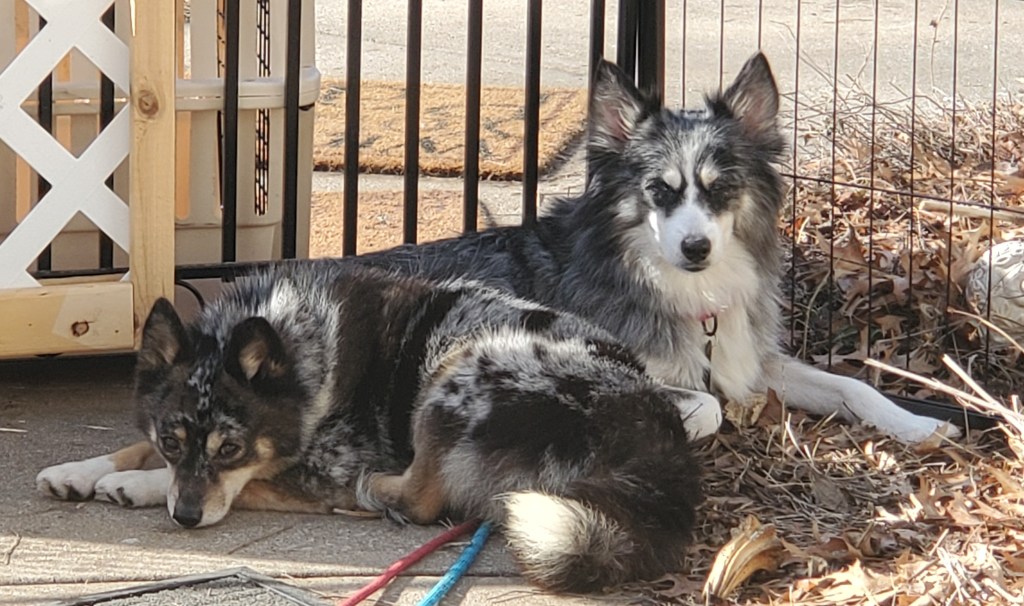
Tippy (in front) and Maya

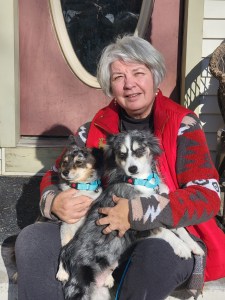
It’s been almost 2 months since Tippy and Maya joined our family and we still have some rough spots to work out.  Tippy is 5 years and Maya is 4 years and they have never been potty trained.  We’re making progress but we have to watch them closely and take them outside frequently. They can be overwhelmed with too much stimulation and don’t have many life experiences having spent their lives in a cage but they are getting better every day.  Maya is not as skittish as Tippy and will come when called (mostly) and loves to be petted.  This helps Tippy accept touching, which she loves but is afraid. 
 The situation they came out of was terrible. Over 500 dogs were rescued at the same time as Tippy and Maya.  Wayside Waifs took over 100 of the dogs.  I have added the people who work at Wayside Waifs to my regular prayer list, whether staff or volunteers, because they do a hard thing.
http://www.waysidewaifs.org

Under a Burnt Umber Sky

A burnt umber sky drips rust
as desert winds swirl clouds of dust
and snap a shredded plastic bag
clenched in the hands of a ragged
tree skeleton imitating live,
where once true life grew green.
It used to be a sweet warm breeze
blew in from the rolling blue sea
bringing rain to bless the ground
blooms and bees and beauty all around.
But now some obscene Frankenstein
created from carelessly discarded crap
bags, balloons, buoys, bottles,
ropes, cups, straws, plates,
six pack rings, polystyrene, food wrappers
sweeps in and out with the sluggish tides
choking life on both land and sea
and leaving only a faint memory of
fish and plants and birds and bees.
The only things living here are the cockroaches.

tons of trash

What a wasteful destructive group we humans are. Every day we use something once and throw it away, mostly because it is inconvenient to wash or reuse. It is estimated that every year we throw another 8 million or so tons of plastic into the ocean. There is currently an island in the pacific twice the size of Texas that is made almost entirely of plastic. It is estimated that there is 276,000 tons of plastic floating in the sea with more either sunk or washed ashore. If we don’t figure out a way to stop this eventually plastic trash will cover the oceans from shore to shore and suffocate all life on this earth. And this is only one of the terrible acts of abuse we pile on our long suffering planet.

A million seabirds and a hundred thousand marine mammals are killed by ocean plastic every year and 700 species of marine animals are in danger of extinction due to plastic. No one is sure of the impact of humans eating seafood polluted with plastic.

According to NOAA it takes 450 years for a plastic water bottle to decompose and 10 to 20 years for a plastic bag. Some sources say it doesn’t decompose it just breaks down into micro plastics.

Links

https://en.wikipedia.org/wiki/Marine_debris

https://www.newsweek.com/great-pacific-garbage-patch-trash-island-pacific-ocean-857494

https://www.condorferries.co.uk/plastic-in-the-ocean-statistics#:~:text=There%20is%20now%205.25%20trillion,their%20way%20into%20our%20oceans.

https://www.healthline.com/nutrition/microplastics#what-they-are

The Art of Listening

I’m a bad listener. Sometimes I don’t want people to get too close to me. Sometimes I don’t feel empathy or compassion or even interest. Sometimes I’m thinking about myself instead of listening to whoever is speaking. Sometimes I let my mind wander and think about other things instead of actively listening.

Each of us bring our own being and creativity to our interactions with those around us. People’s stories impact us all differently and we hear them differently. Each of us layer our own experiences over the stories being told. Body language and other unspoken signals also impact our listening. Listening, good listening, requires focus and a blending of the story being told with our own experiences to gain understanding. These things, focus, blending of our experiences with the story, the need for interpretation of the intent of the words and the unspoken signals are many of the same skills I bring to my art (stitching, writing, multimedia art projects).

Different circumstances surrounding listening also require our interpretation. Each type of listening requires a variation of listening. Yet another thing about listening that requires our interpretation. Here is my list of various types of listening.

  • Listening to myself
  • Listening to God
  • Listening to a speaker in a large group
  • Listening to a friend over coffee
  • Listening to a casual acquaintance
  • Listening to a friend at a party or family celebration.
  • Listening to a friend in trauma
  • Listening to a friend on a joyous occasion.

And here is my list of things not to do or say when listening.

  • Don’t think about how to respond while the other person is talking.
  • Don’t be distracted by technology and/or daydreaming.
  • Don’t respond with a platitude.
  • Don’t make it all about self by telling a story that minimizes the other person’s story.
  • Don’t let eyes wander instead of focusing on the other person’s face.
  • Don’t listen passively instead of actively engaging with what the other person is saying.
  • Don’t try to change the subject because its uncomfortable.
  • Don’t be afraid of silence.

If one gives an answer before he hears, it is his folly and shame. Prov. 18:13 NIV

Is there any time we shouldn’t listen? I had to think about this. When I started writing this post I thought that we should always listen but as I deliberated on the topic I realized there are times when we shouldn’t listen.

  • When the story is gossip.
  • When the story is offensive to others, whether political, ethnic or personal.
  • When the story is overwhelming.
  • When the story is not uplifting or helpful.
  • When the story indicates the person telling it needs more help than you can give.

A perverse person stirs up conflict, and a gossip separates close friends. Prov. 16:28 NIV

Listening when the topic is hurtful is destructive to everyone involved. Again we must interpret the words and decide what to do. Sometimes we can just walk away. Sometimes we need to tell the person speaking that the story they are telling is inappropriate. Sometimes we need to find help for the person telling the story when we are overwhelmed or cannot give the help they need. Deciding what to do is difficult and requires discernment of the person, the situation, and our own weaknesses. There may be offense at first but the goal is for everyone to realize the need to guard our words and speak things that are helpful and not hurtful.

My goal is to get better at listening; to focus on the person and the story being told and to put distractions (including how I should answer) aside and to really hear what is being said. I’m working on recognizing and replacing bad habits like those on the not to do list with better listening skills.

Pet Peeve Platitudes

I started down this particular rabbit hole because I am always looking for new poets and recently found the following post by Nikita Gill on Instagram. I don’t always agree with what she says but that’s one of the things I like about her.  This post started me thinking about the dangers of platitudes in general and speaking without thinking specifically.

(Make sure you click on the arrow in the black box to see both posts in the set.)

Platitude – noun – a remark or statement, especially one with a moral content, that has been used too often to be interesting or thoughtful.

“he masks his disdain for her with platitudes about how she should believe in herself more”

Definition from Oxford Languages

I think this definition is lacking. It’s not just that platitudes are overused; it’s also that we use platitudes so we don’t have to think or feel. Platitudes allow us to move away from a situation or an emotion, feeling satisfied we have done our part. Yet many times, we have minimized and denied the truth and emotion of the the situation and done more damage than good.

Everything happens for a reason.

I find this platitude particularly offensive. We usually pull it out when something terrible has happened and our friend is trying to deal with all the fallout from a tragedy. With this platitude we don’t have to listen, we don’t have to understand, we just throw this out and justify our stupidity.

Next time you feel the need to use this platitude just stop. STOP. Instead listen, listen to your friend and don’t try to fix, don’t try to answer why; just listen and let your friend tell you how she feels and what she is thinking. Let your friend feel what she is feeling.

Everything happens for a reason.

…only if you include time, chance, stupidity, evil, a messed-up world, chaos, and no reason at all.